
There was a time when pre and primary educators were mainly expected to teach children how to read, write, count, colour within lines, and follow classroom routines. These skills still matter. They form the foundation of early learning. But in 2026, the expectations from pre and primary educators have expanded far beyond ABCs and numbers.
Today’s young learners are growing up in a world shaped by technology, social change, emotional pressure, global classrooms, and fast-moving information. They need more than early literacy and numeracy. They need confidence, curiosity, empathy, communication skills, problem-solving ability, and emotional balance.
This shift has changed the role of the teacher.
A pre and primary educator is no longer only an instructor. The teacher is now a guide, observer, facilitator, emotional anchor, learning designer, and partner in a child’s overall development.
Early Education Is No Longer Just Academic
Parents and schools now understand that early childhood and primary years are not only about preparing children for exams. These years shape how children think, behave, communicate, and respond to the world around them.
A child who learns to read early but cannot manage frustration may struggle in group learning. A child who can count well but cannot express feelings may find it hard to build friendships. A child who follows instructions but never asks questions may miss out on deeper learning.
This is why modern classrooms focus on the whole child.
Pre and primary educators are expected to support language, movement, imagination, emotional growth, social behaviour, independence, and moral understanding. They must notice how children learn, not just what children learn.
This requires a more thoughtful approach to teaching.
The Teacher as a Developmental Observer
Young children do not always explain what they feel. They show it through behaviour, play, silence, movement, drawings, and reactions. A skilled educator learns to observe these signs.
For example, a child who refuses to join group activities may not be disobedient. The child may feel anxious. A child who keeps interrupting may be seeking attention or struggling with impulse control. A child who avoids writing may have fine motor difficulties, not laziness.
Modern pre and primary educators must look beneath the surface.
This is where professional preparation becomes important. A Bachelor of Education in Pre and Primary Education helps educators understand child development, learning milestones, classroom behaviour, and age-appropriate teaching strategies. It prepares them to respond with patience and purpose instead of relying only on correction or discipline.
In early education, observation is not a small skill. It is one of the most powerful tools a teacher can have.
Emotional Support Has Become a Classroom Priority
Children today are exposed to more stimulation than ever before. Screens, busy routines, changing family structures, academic pressure, and social expectations can affect their emotional world.
This has made emotional support a key part of teaching.
A pre and primary educator must create a classroom where children feel safe enough to try, fail, speak, share, and ask for help. This safety does not come from colourful walls or attractive worksheets. It comes from the teacher’s tone, consistency, warmth, and response.
When a child makes a mistake, the teacher’s reaction matters. When a child cries, the teacher’s patience matters. When children argue, the teacher’s guidance matters. These moments teach children how to handle emotions, solve conflicts, and respect others.
Academic skills can open doors, but emotional security helps children walk through them with confidence.
Play Is Now Seen as Serious Learning
Many adults still see play as a break from learning. In reality, play is one of the strongest ways young children learn.
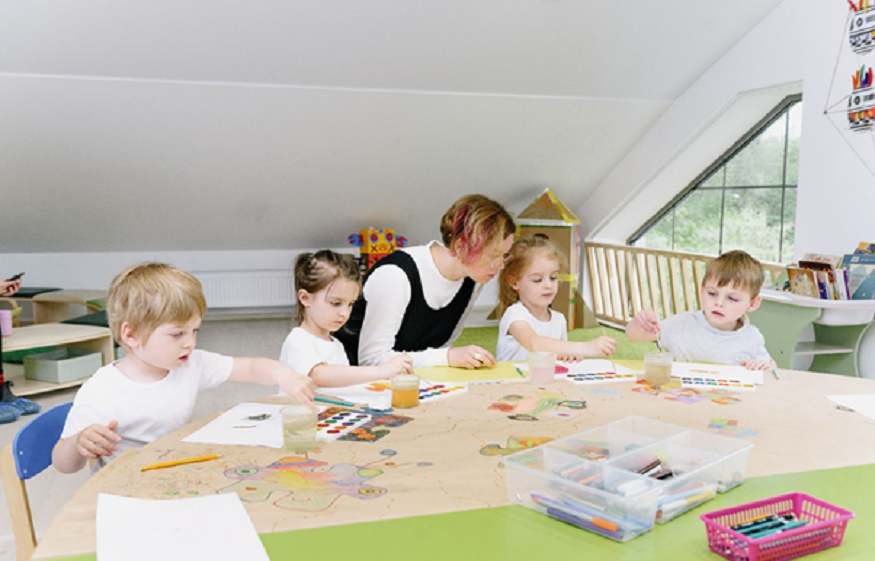
Through play, children practise language, decision-making, imagination, movement, teamwork, and problem-solving. A pretend shop can teach counting, speaking, turn-taking, and social roles. Building blocks can introduce balance, planning, patience, and early maths. Storytelling can improve vocabulary, memory, confidence, and creative thinking.
The role of the educator is to make play purposeful without making it rigid.
This means choosing the right materials, asking thoughtful questions, extending children’s ideas, and creating opportunities for exploration. A teacher may ask, “What do you think will happen if we add one more block?” or “How can your character solve this problem?” These simple questions encourage thinking.
In modern pre and primary education, play is not extra. It is essential.
Inclusion Is No Longer Optional
Classrooms today are more diverse. Children come with different abilities, languages, cultures, learning speeds, family backgrounds, and emotional needs. Some children may need additional support with speech, attention, sensory processing, reading, movement, or social interaction.
This has made inclusive education a core expectation.
Teachers must know how to adapt activities so that every child can participate. They may use visual aids, movement breaks, peer support, simplified instructions, flexible seating, or alternative ways of expression. Inclusion does not mean giving every child the same task in the same way. It means giving every child a fair chance to learn.
A B.Ed. in Pre and Primary Education can help teachers understand inclusive practices and classroom adaptation. It also builds awareness of how different learners respond to different teaching methods.
The best early classrooms are not those where all children learn at the same pace. They are those where every child feels valued.
Parents Now Expect Stronger Partnership
Another major change is the relationship between teachers and parents. Parents today want regular communication, progress updates, emotional insights, and practical suggestions. They want to know not only whether their child can read or count, but also how their child behaves, participates, listens, shares, and manages challenges.
This makes communication a vital teacher skill.
Educators must explain concerns with sensitivity. They must celebrate progress honestly. They must guide parents without sounding judgmental. They must also understand that families may have different expectations, cultures, pressures, and parenting styles.
A teacher who can build trust with parents creates a stronger support system for the child.
When parents and teachers work together, children receive consistent guidance at home and school. This partnership can make early learning smoother, calmer, and more meaningful.
Teachers Need Continuous Professional Growth
The expectations from pre and primary educators are growing. Schools need teachers who understand child psychology, classroom management, inclusive education, digital learning, parent communication, creative pedagogy, and emotional development.
This is why professional training matters more than ever.
Many aspiring educators look for Teacher training courses in Dubai to build classroom-ready skills in a global learning environment. Such training can help teachers understand modern education trends, international classroom expectations, and practical teaching methods.
Teaching young children is not simple work. It requires planning, patience, creativity, and deep responsibility. Every activity, story, song, question, and classroom routine can shape how a child sees learning.
Bottom Line
The role of pre and primary educators has changed in powerful ways. In 2026, schools and families need educators who can prepare children not only for the next grade but for life. This is where a Bachelor of Education in Pre and Primary Education can support aspiring teachers in building the right skills, awareness, and confidence for modern early classrooms. A strong teacher helps children become curious thinkers, kind friends, confident speakers, and independent learners.